Objects & time
The watch you will actually wear
Beyond rarity and resale: finding the piece that becomes part of your own visual language.
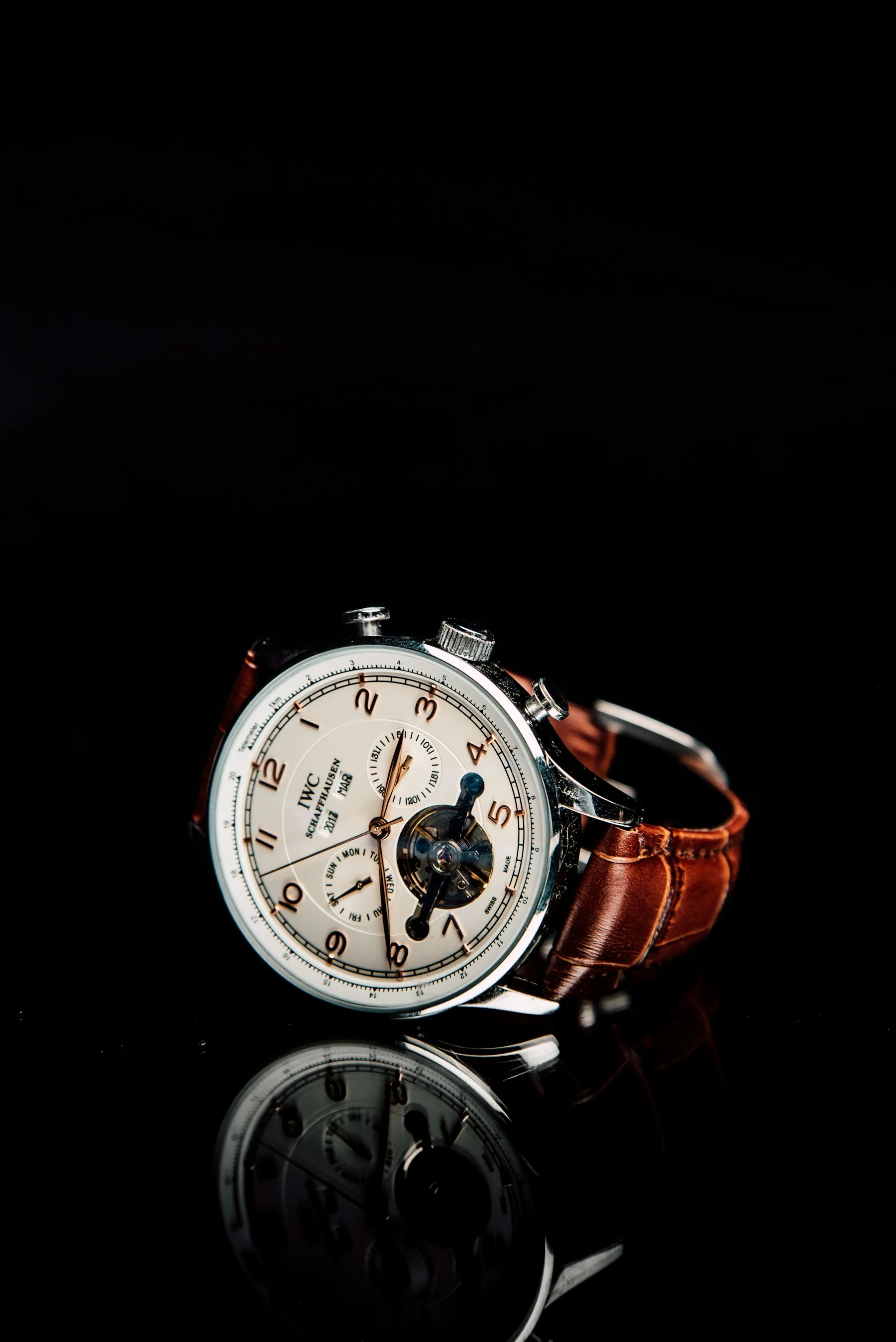
A brief that begins with the watch that feels inevitable on the wrist
A watch earns its place slowly. It begins as an object of fascination, becomes a dependable companion and, one day, carries a mark that tells a better story than any certificate. The market is full of excellent references, but the right watch is personal. Proportion may matter more than a complication; a quiet independent movement may matter more than a famous name; a vintage case that has been worn honestly may be more compelling than an untouched example that never quite invites use. The best collection begins with the question: what will you actually wear?
The strongest decisions begin before a shortlist exists. A useful brief establishes the purpose of the purchase, the setting in which it will be enjoyed, the level of involvement that feels right and the compromises that are genuinely unacceptable. That is more valuable than beginning with a headline price or a list of fashionable names. It gives every later conversation a clear test: does this opportunity support the life the buyer actually wants to lead?
Context before momentum
Watch collecting now moves at the speed of global information, yet the most enduring decisions still reward patience. Auction results and online asking prices are data points, not an instruction to buy. A rare dial, an original bracelet, documented ownership, a period-correct service history or simply outstanding proportions can change the significance of a reference. Looking beyond hype gives a collector room to find pieces with real character and to decide according to taste rather than noise.
Market information is most useful when it is interpreted, not merely collected. A headline result can be exceptional for reasons that are invisible in a chart: a rare specification, a long-standing family ownership history, an unusually complete record, a restorative location or a moment when two determined buyers met. Equally, a quiet listing may be correctly priced because it carries work, restrictions or an ownership structure that needs patient attention. Context is what turns information into judgement.

The evidence behind the story
A watch’s papers, box, service record and sales receipt are useful, but the object itself remains the primary evidence. Serial numbers, movement and case details, dial condition, hands, luminous material, bracelet stretch and signs of over-polishing should be considered together. For vintage pieces, originality is often nuanced: sympathetic maintenance can be appropriate, while careless replacement can reduce historical coherence. Independent authentication is a sensible part of a serious purchase.
Documents are not an administrative afterthought. They are the thread that connects an object, property or aircraft to its history, its condition and its future liquidity. Records should be read alongside the thing itself: dates can be checked against physical details, maintenance can be compared with use, and ownership claims can be tested with the people who have first-hand knowledge. When records are incomplete, that does not always end a conversation; it simply changes the risk, the value and the questions that deserve an answer.
Condition, care and specialist advice
Mechanical watches are designed to be serviced, not left untouched forever. The question is whether the work has been carried out with judgement and whether the right parts have been retained. A specialist watchmaker can assess timing, water resistance, wear and the quality of earlier intervention. This is particularly important for complications, precious-metal cases and vintage pieces, where a routine-looking repair can have a disproportionate effect on future enjoyment and value.
The best specialists are practical rather than theatrical. They explain what is original, what has changed, what needs attention now and what can be planned for later. They also understand the difference between an issue that is normal for age and use, and one that will affect safety, enjoyment, insurability or the ability to sell in future. Independent advice gives a buyer the freedom to appreciate character without being surprised by avoidable cost.
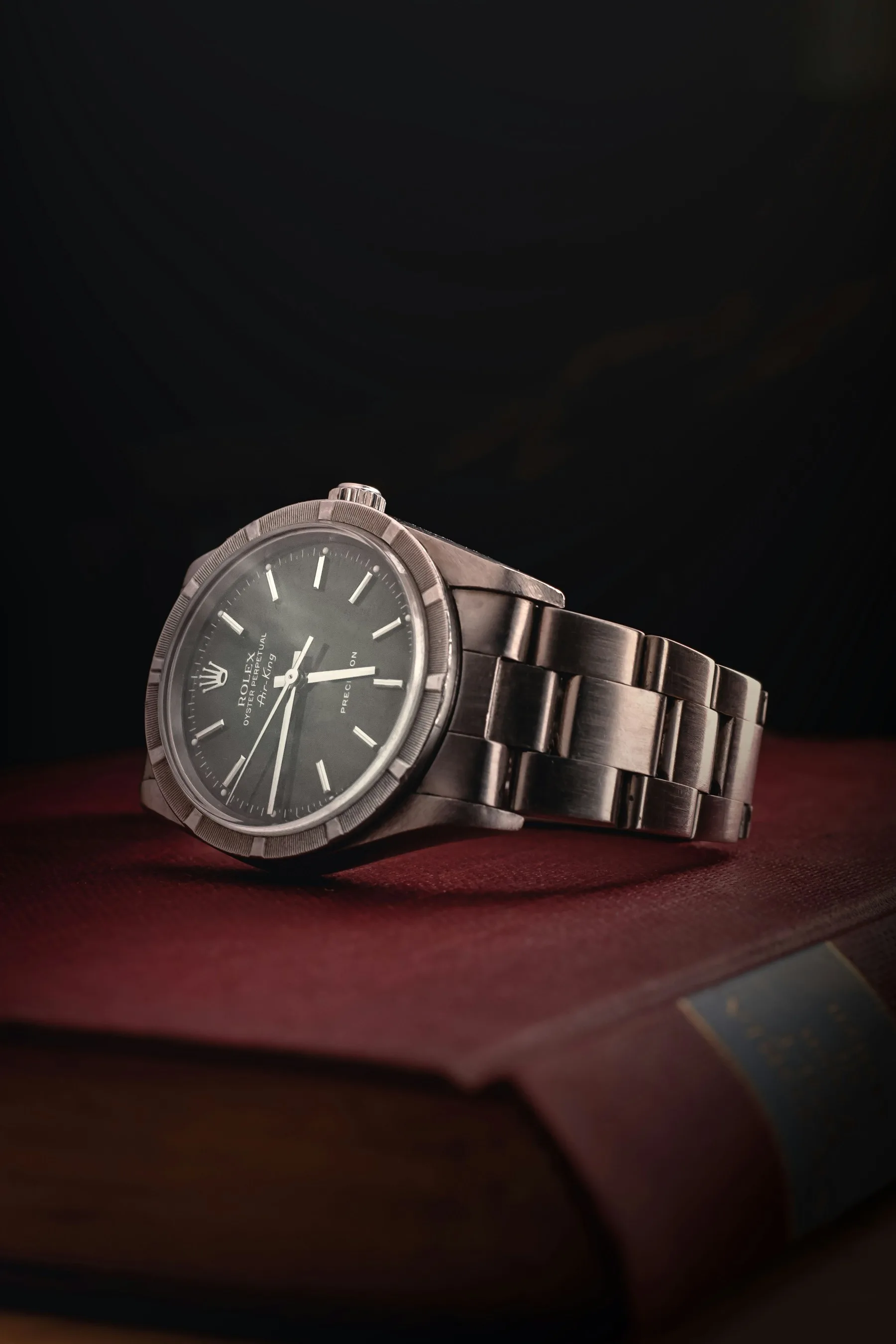
Thinking beyond the purchase price
A thoughtful collection has room for use. Rotation, secure storage, insurance, careful travel and servicing intervals should be planned from the beginning. Keeping a simple record of serial numbers, photographs, purchase documentation and service work provides reassurance without turning ownership into administration. If a piece is meant to mark a life event, the value of wearing it may ultimately be greater than the value of keeping it sealed away.
A sensible ownership plan includes the invisible work: storage, transport, insurance, specialist maintenance, documentation, security, tax advice where appropriate and the time required to make good use of the purchase. These are not reasons to become cautious about a compelling opportunity. They are reasons to decide with clarity. The most satisfying acquisitions tend to be the ones that arrive with an operating plan as considered as the selection itself.
Private opportunities and patient access
Collectors often find the best opportunities through trusted dealers, independent specialists and the quieter conversations that happen between people who understand a particular reference. Discretion makes room for proper inspection and a more accurate exchange of information. A credible buyer who knows what they are looking for can be offered pieces before they are advertised widely, especially when the seller cares where a significant watch will go next.
Discretion matters at both ends of a transaction. Some owners prefer to test interest quietly; others need time to make a decision without a public campaign. That is why a well-kept network remains useful even in a transparent age. Access should never be confused with pressure. The point is to be ready when an appropriate conversation becomes possible, with a brief that is clear enough to make the right introduction meaningful.
Negotiation as a process of understanding
Good negotiation is not simply an attempt to move a number. It is a process of understanding what each side needs in order to proceed: timing, confidentiality, handover, warranties, included equipment, specialist reports or the certainty that a good home has been found. A buyer who has completed the work on condition, provenance and ownership is in a stronger position to be decisive when it matters, without mistaking speed for haste.
The final terms should reflect the evidence gathered during the search. Where the facts are clear, confidence can be clear too. Where there are open questions, they should be addressed in the agreement, the price or the timeline—not ignored for the sake of a quick conclusion. That approach protects relationships as well as capital, and it makes the handover feel like the beginning of ownership rather than the end of a negotiation.
Research that earns trust
The British Horological Institute is a long-established educational and professional body dedicated to horology. Its network and technical perspective are useful reminders that qualified workmanship and a documented service history are central to the long-term care of mechanical watches.
Authoritative guidance cannot replace independent professional advice for a specific transaction, but it is an excellent starting point for better questions. It helps a buyer distinguish a confident statement from a supported fact, and it encourages the right checks before money changes hands. We treat research as part of the service: a way to make introductions more useful, decisions more transparent and the eventual purchase more resilient.
A practical framework for deciding well
Before an offer is made, it helps to bring the search back to a simple decision framework. Does this opportunity meet the brief that was set at the beginning? Is its quality visible in the thing itself and supported by the records? Are the condition, running costs and specialist requirements understood? Is the price sensible in the context of the evidence, rather than a reaction to a headline or a fear of missing out? A clear answer to each question creates the confidence to proceed—or the discipline to walk away.
This framework also makes professional advice easier to use. Legal, technical, tax, insurance and operational specialists can focus on the details that matter to the buyer, rather than being asked to validate a vague enthusiasm after it has already hardened into a decision. Their work is most useful when it is invited early enough to shape the purchase, not merely to confirm it.
There is value in taking a final quiet moment before completion. Revisit the intended use, the support network and the future plan. If an acquisition still feels right after the excitement of discovery and the scrutiny of diligence, it is likely to offer the kind of enduring satisfaction that makes ownership worthwhile.
Making room for the human element
Research, reports and market context are essential, but they are not the whole decision. A meaningful acquisition should also leave room for the human element: the way a home changes the rhythm of a family, the person who will maintain a mechanical object, the pleasure of sharing a bottle, the route an aircraft or yacht makes possible, or the memory a work of art will hold. These are not soft considerations. They are often the reasons an owner continues to care for an asset well and understands its value beyond a resale calculation.
It is worth involving the people who will live with the decision. A partner may notice a practical flaw in a house plan; a trusted captain, driver, cellar manager, curator or financial specialist may see a question that would otherwise emerge only after completion. Their perspective can make a brief more precise, and it can prevent a purchase from being technically impressive but personally wrong.
Equally, the right opportunity does not need to answer every imagined future need. The aim is not to remove all uncertainty—that would rule out the most distinctive choices—but to understand the decisions being made and accept the trade-offs consciously. Once those trade-offs are named, a buyer can decide with more freedom and less regret.
This is why a well-run search has a rhythm of its own: discovery, comparison, independent scrutiny, quiet reflection and then a clear decision. It is more deliberate than a quick transaction, but it is not slow for the sake of it. It simply gives the qualities that cannot be measured in a spreadsheet enough time to reveal themselves.
The measure of a considered acquisition
The most enduring purchases feel less like a trophy and more like a natural part of a life already in motion. They work in the intended setting, invite use rather than anxiety, and continue to reward attention long after the initial excitement has passed. That is why the search should be generous with time at the beginning. A measured process makes room for instinct, but asks instinct to stand beside evidence.
International Agent approaches every brief with this balance in mind: private access, practical diligence and an eye for the details that make an opportunity personal. Whether the aim is a first meaningful purchase, a collection with a new direction or a discreet sale, the right outcome begins with a conversation that is specific enough to be useful and open enough to discover what has not yet been considered.
Continue your search
Useful next steps
Independent reference
A respected UK authority on horology and skilled watchmaking.
British Horological Institute“Good judgement is knowing what deserves your attention.”